

At the 2026 Multi‑Modal eMobility Summit in Grosse Ile, Michigan, URBANPoRT co‑founder Kara Johnson delivered a keynote that was equal parts technical deep‑dive, national progress report, and call to imagination. A native of Grosse Ile and a Part 107 FAA‑certified unmanned aircraft pilot, Johnson brought more than two decades of engineering, product development, and prototype experience to the stage — along with the authority of someone who holds a patent for a mobile aviation charging platform.
“I patented a charging pad for electric vertical takeoff and landing planes… just like you would set your cell phone down on a charging pad,” she explained.
Her keynote traced the rapid evolution of electric aviation, the OEMs leading the charge, and the nationwide infrastructure programs now underway — including three where URBANPoRT plays a central role.
The OEMs Defining the Next Era of Flight
Johnson began by spotlighting three manufacturers shaping the electric aviation landscape — each already valued in the billions and flying demonstration missions around the world.
Joby Aviation
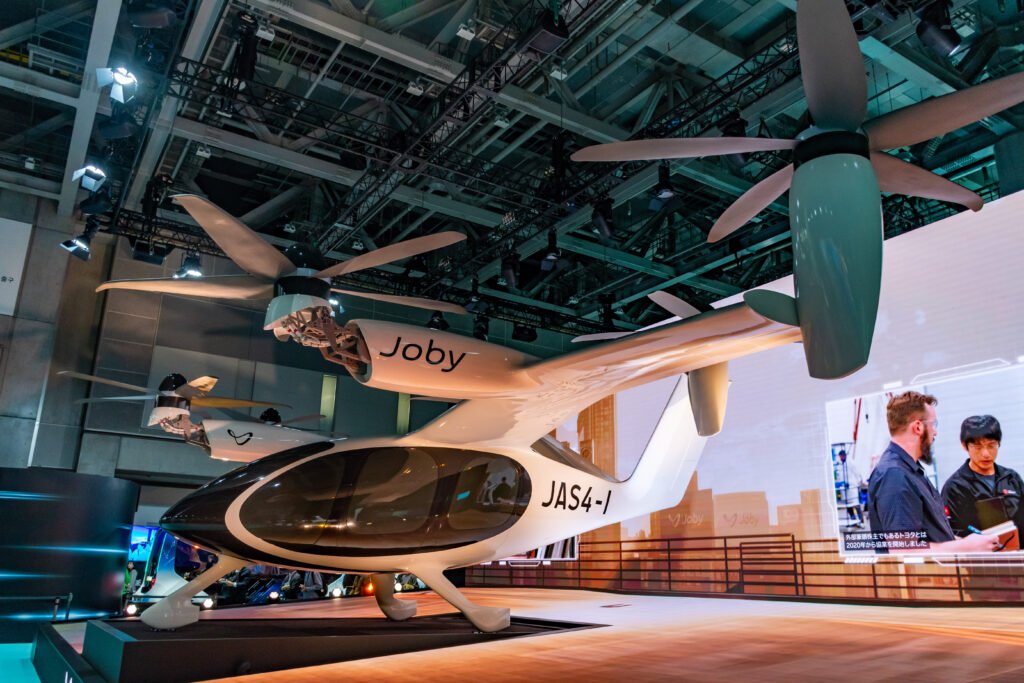
Joby’s S4 eVTOL has been flying in New York, Europe, and across the U.S., backed by investors including Delta Air Lines, Uber, Toyota, and the U.S. Air Force. The aircraft cruises at 200 mph, carries four passengers plus a pilot, and offers a 100‑mile range. Toyota will manufacture Joby vehicles in Dayton, Ohio, leveraging automotive‑grade production capacity.
Johnson noted that Joby’s partnership with Uber could soon make air taxis as accessible as rideshare:
“You’re gonna slide one more time, and it’s gonna be your air taxi.”
Archer Aviation – Midnight
Archer’s Midnight aircraft mirrors Joby’s range but uses 12 motors, including six tilting rotors for vertical lift. With backing from Stellantis, manufacturing is underway in Covington, Georgia. Archer is also developing Thunder, an autonomous military variant in partnership with defense firm Anduril.
Archer’s momentum is accelerating: it has been named the official air taxi provider for the 2028 Los Angeles Olympics.
BETA Technologies – CX300
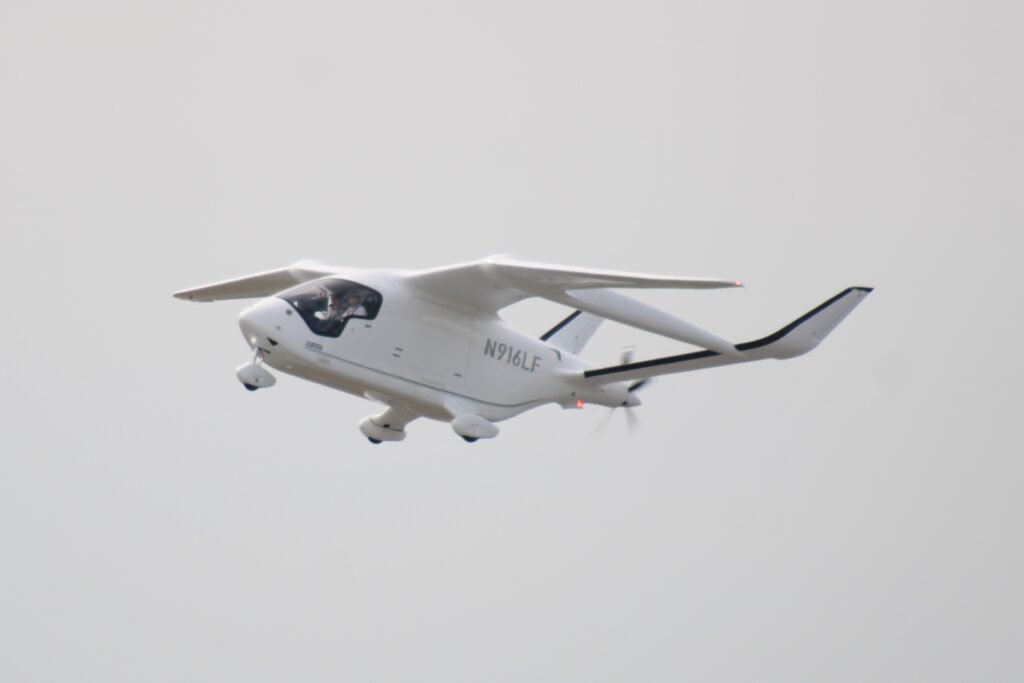
Unlike the eVTOL designs of Joby and Archer, BETA’s CX300 is a fixed‑wing electric aircraft requiring a 3,000‑ft runway — but offering a 250‑mile range and strong cargo capability. BETA recently signed a contract to deliver 25 aircraft to Hawaiian Airlines, ideal for inter‑island commuter routes. Additional partners include GE Aerospace, Amazon, and UPS.
The National Electric Infrastructure Programs (EIPP)
URBANPoRT is involved in three of the eight winning EIPP proposals nationwide — a testament to the importance of mobile charging infrastructure in early electric aviation deployment.
Johnson walked the audience through each region:
1. California & the 2028 LA Olympics
With 8–10 million additional visitors expected, air mobility is being integrated into Olympic transportation planning. Archer’s air taxis will serve 49 venues, and URBANPoRT’s mobile landing/charging pads will act as temporary pop‑up vertiports that can be relocated after the Games — next stop: Utah’s Winter Olympics.
2. Florida – “Highway in the Sky”
Florida’s phased plan includes:
- A central‑state aerial corridor between Tampa and Orlando
- East‑coast landing sites from St. Lucie County to Miami‑Dade
- Testing at SunTrax, which is adding landing pads, a TSA‑style mini‑FBO, and simulation facilities
The FAA’s evolving battery‑safety rules — including strict charge‑level requirements and triple‑redundancy systems — shape how these corridors will operate.
3. North Carolina – Healthcare & Emergency Mobility
After Hurricane Helene, North Carolina used drones extensively for damage assessment. Now, the state is planning electric aviation routes to support:
- Medical supply transport
- Organ transplant logistics
- Hospital‑based helipads
- Outer Banks connectivity for its 500,000 residents
URBANPoRT’s patented mobile charging pads will play a key role in enabling rapid deployment.
The Technology Behind URBANPoRT’s Mobile Charging Pads
Johnson’s patented landing pad is engineered for real‑world conditions:
- Inductive or direct battery charging built into the pad
- Self‑leveling up to 9 degrees for uneven terrain
- Debris‑reducing airflow design that prevents downwash from kicking up FOD
- Vibration‑absorbing structure that stabilizes landings
- Towable mobility — the pad weighs 8,500 lbs and can be hauled like a center‑console boat
A demonstration using an R44 helicopter in Statesville, NC showed how the pad improves safety:
“All of your debris did not come back up into the mechanics of the helicopter.”
Johnson closed with encouragement for engineers, investors, and policymakers to stay engaged with the rapidly evolving e‑mobility ecosystem:
“This is an amazing, innovative, creative industry… keep those juices flowing.”
Her keynote made clear that electric aviation is no longer theoretical — it is being built now, across states, agencies, and OEMs. And with mobile infrastructure solutions like URBANPoRT’s, the industry is gaining the flexibility it needs to scale quickly and safely.



Recent Comments